
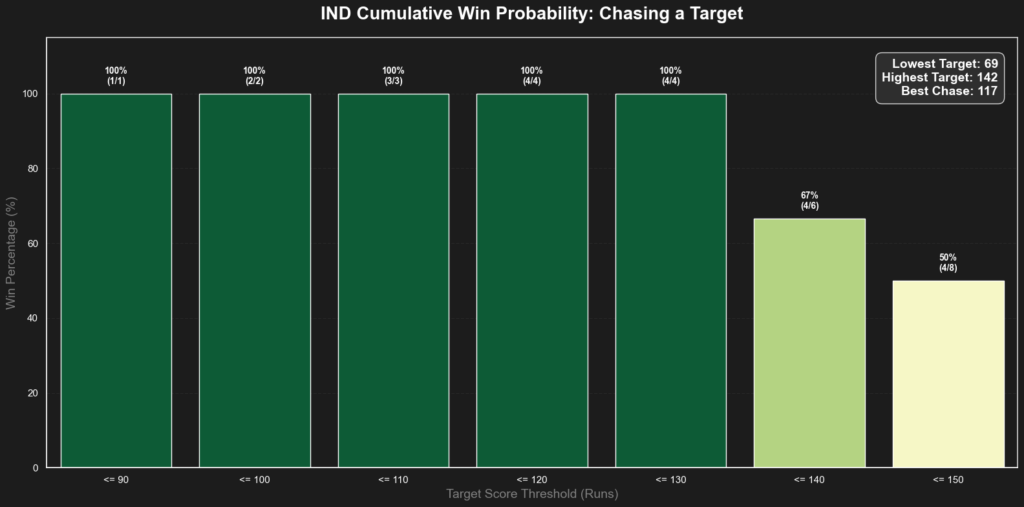
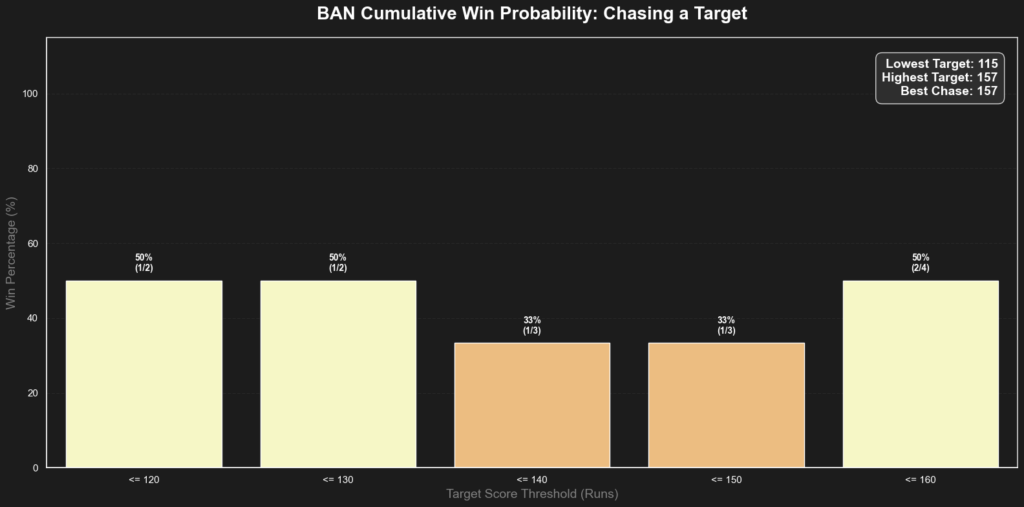
The upcoming series reveals a fascinating tactical threshold: 130 runs. The data indicates that this specific number is the “tipping point” for both sides, turning the toss into a high-stakes strategic decision.
1. The Toss Dilemma: Bangladesh’s Defending Problem
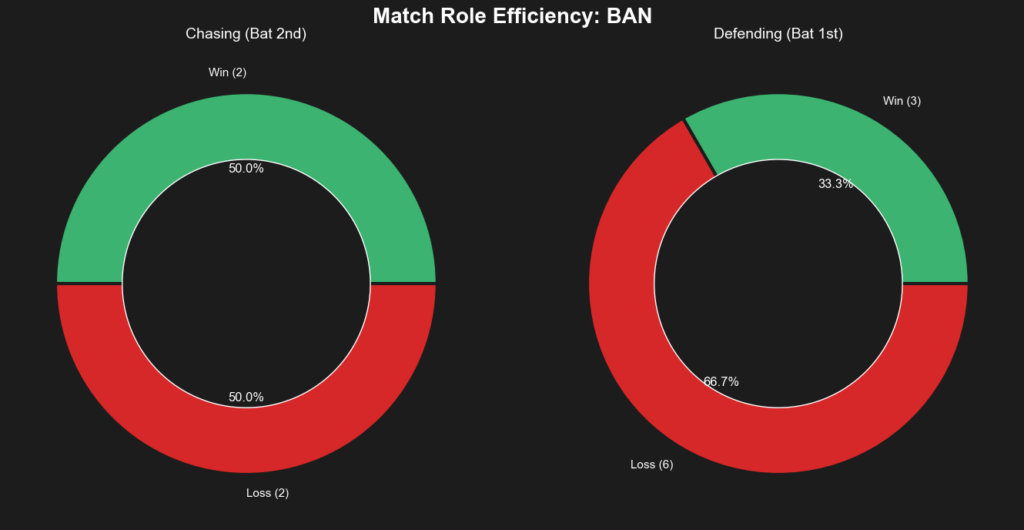
- Bangladesh: They struggle significantly when asked to set a target, winning only 33.3% of matches when batting first (defending) compared to a 50.0% win rate when chasing.
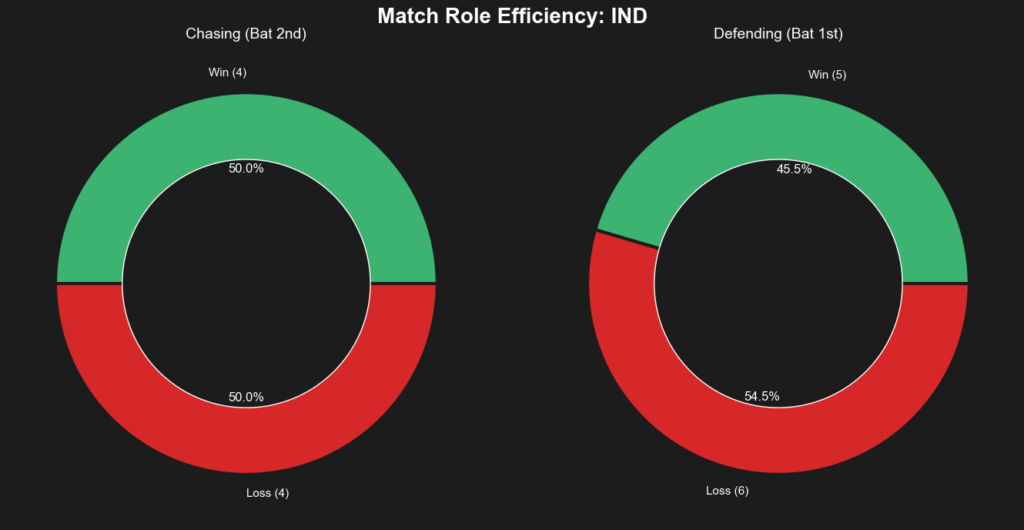
- India: The Men in Blue are far more balanced. They hold a 50.0% win rate while chasing and a comparable 45.5% win rate while defending, making them dangerous in any scenario.
2. The “Magic Number”: 130 Runs
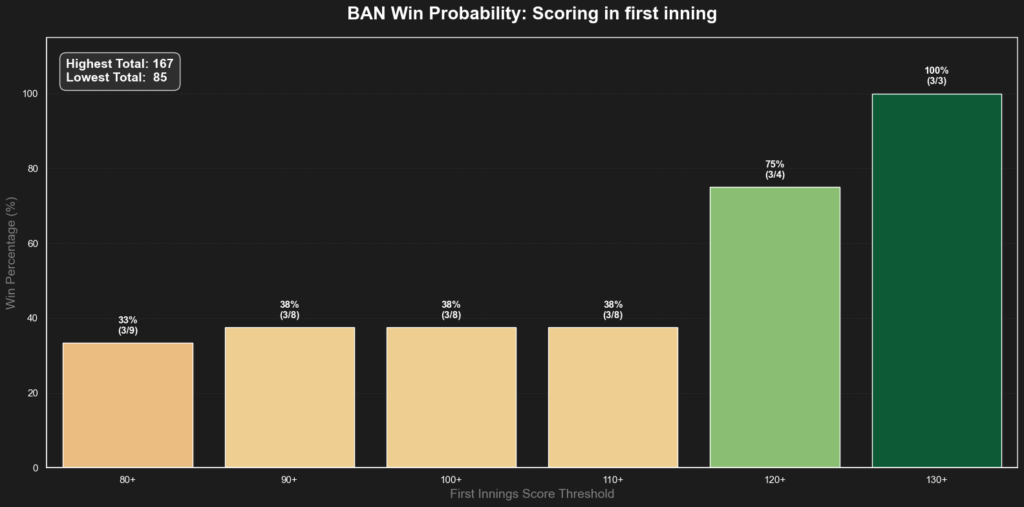
- For Bangladesh (Batting First): 130 is the safety line. When Bangladesh scores 130 or more, their win probability skyrockets to 100% (3/3 matches). Below that threshold, their chances drop drastically (e.g., 38% at 90+ runs).
- For India (Chasing): Here lies the conflict. India is clinically efficient at chasing low totals. If the target is 130 or lower, India has a 100% win rate. They only start showing vulnerability when the target creeps toward 140 (win rate drops to 67%).
3. The Verdict: The Battle for the 130-Run Mark The strategy for this series is mathematically clear:
- If Bangladesh bats first: They must cross 130. Anything less is statistically a guaranteed loss against this Indian chasing lineup.
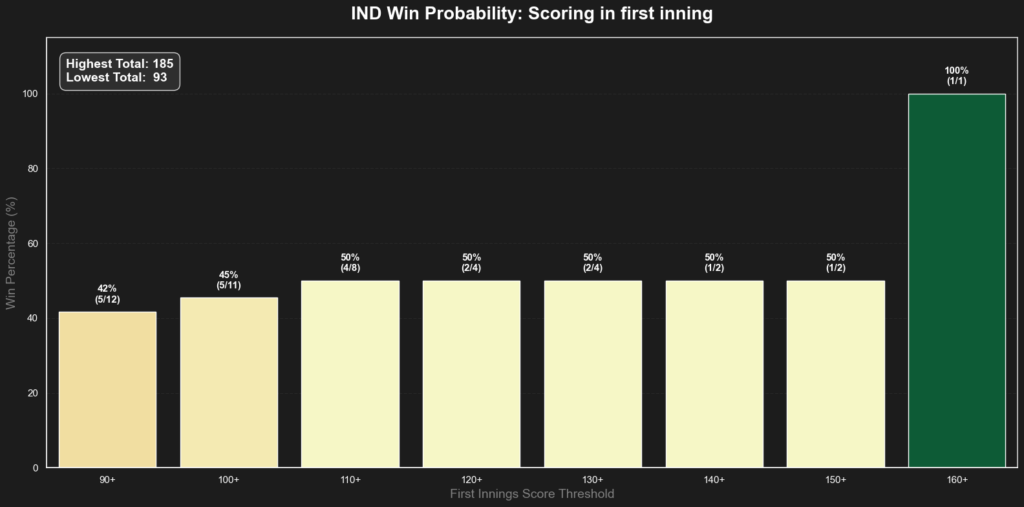
- If India bats first: They are safer. While 160+ guarantees a win (100%), they maintain a competitive ~50% win rate even with scores as low as 110.
The series may well be decided by who controls the 130-run threshold. If Bangladesh’s bowlers can restrict India below it, or if their batters can push past it, they have a fighting chance. If not, the data favors an Indian victory.